
Organized by the Innovation Academy, the Engineering InnoShow is held at the end of each semester, offering students a platform to showcase innovative projects and achievements to peers and the public, fostering knowledge exchange and societal impact.
The 11th Engineering InnoShow, themed “Together, We Innovate!”, took place at the Tam Wing Fan Innovation Wing on April 29, 2026. Engineering students demonstrated their projects to a panel of judges during the event.
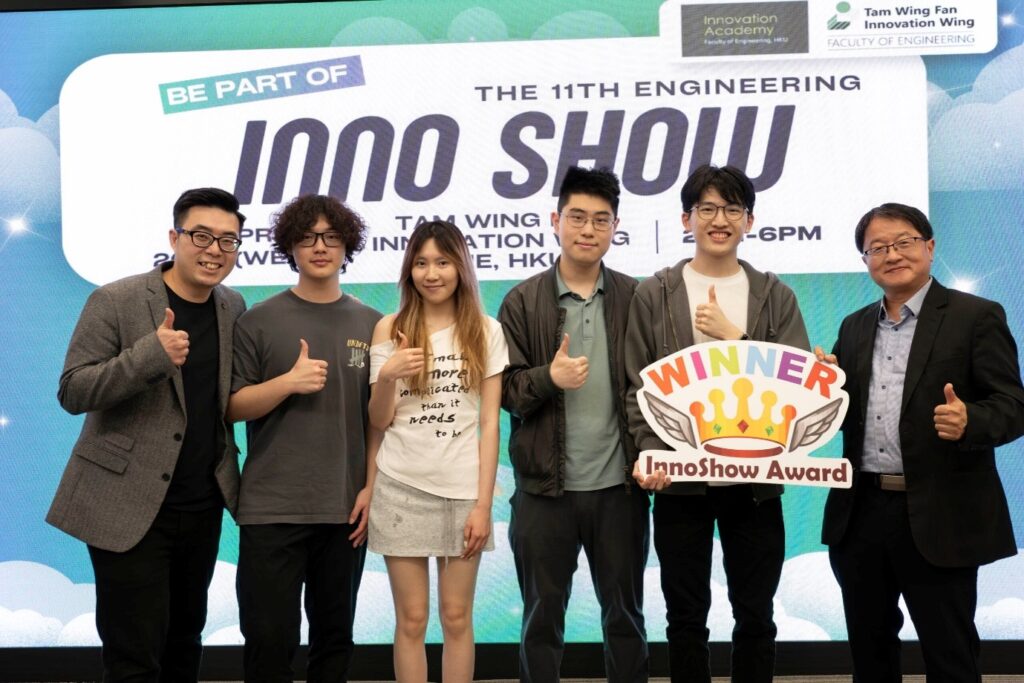
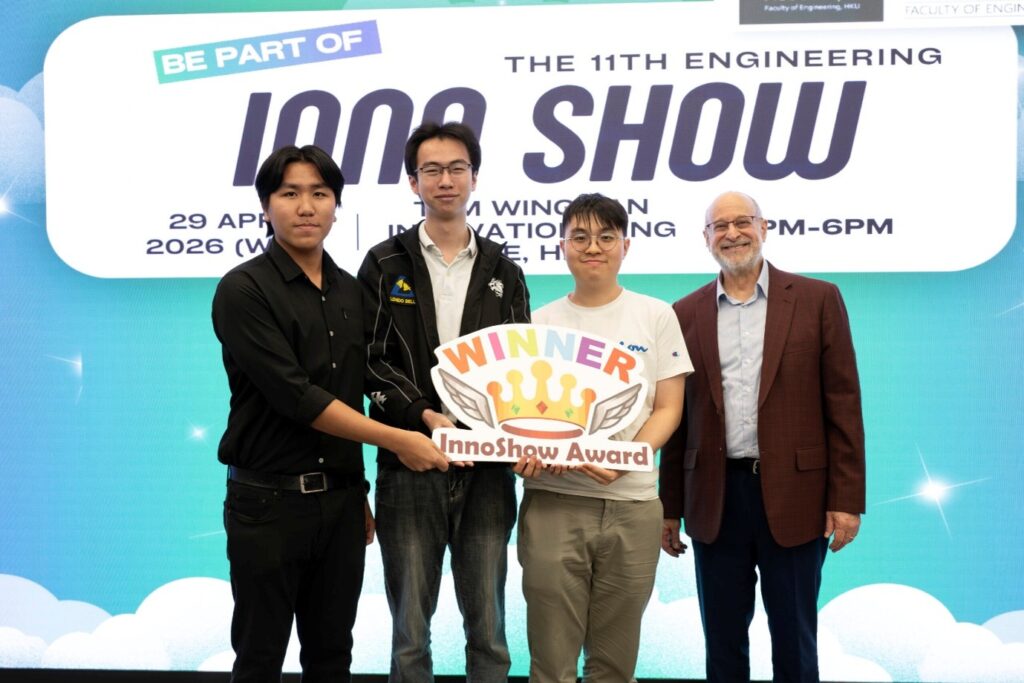
Five teams were selected as winners of the InnoShow Award, while one team received the “Super Good Job Project Award.” The InnoShow Award, judged by a professional panel, aims to encourage students to cultivate innovative approaches to engineering and social challenges while supporting outstanding ideas for international design competitions. The Dean’s Innovation and Entrepreneurship Fund will allocate HK$100,000 to sponsor up to five participating student teams from the InnoShow for international competitions. The “Super Good Job Project Award” was determined by participant voting.
Two of the winning teams are from the Department of Mechanical Engineering, which are,
(1) HKU ROV Team – winner of InnoShow Award and Super Good Job Project Award
(2) Overhead Power Line Coating Robot Development – winner of InnoShow Award
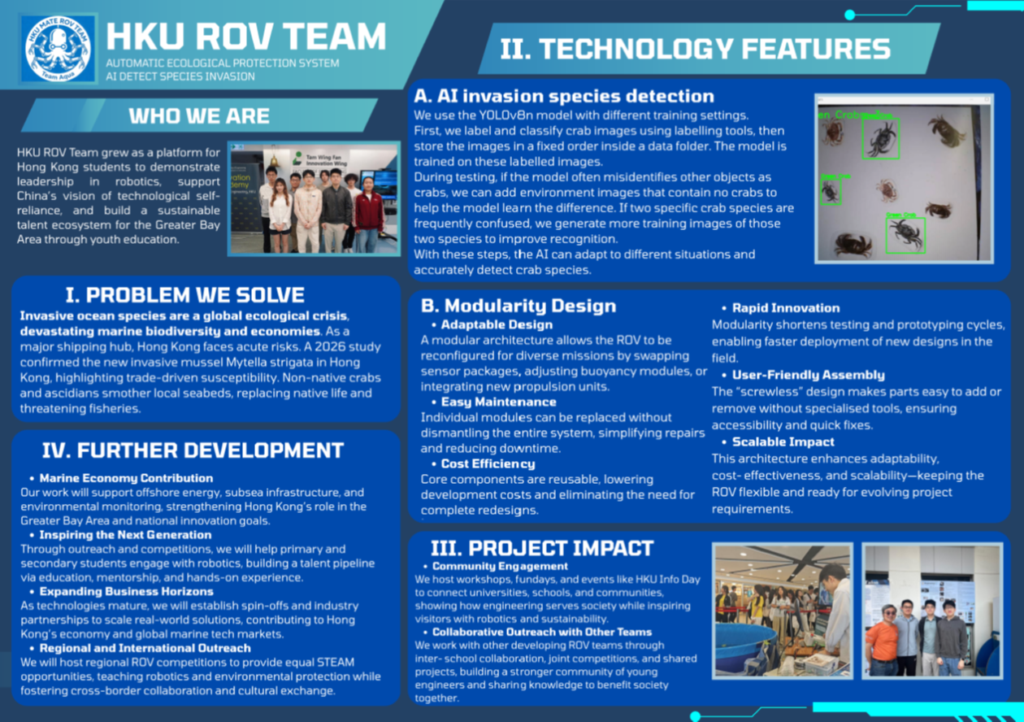
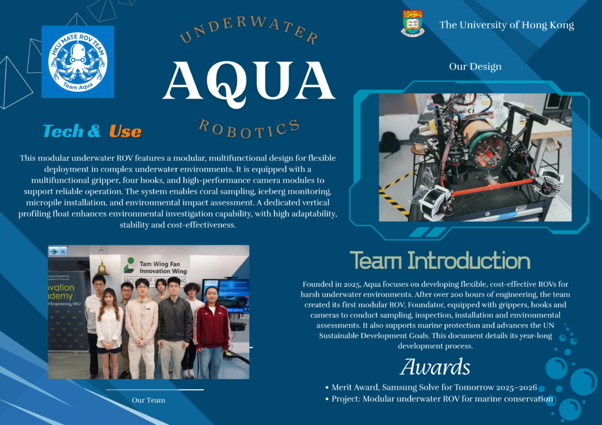
HKU ROV team
The team successfully designed an underwater robot for handling a diverse range of underwater tasks, including AI invasion species detection and gripping underwater objects with claws. The team members demonstrated their dedication in engineering work, and advanced engineering knowledge in mechanical design, and programming knowledge through their underwater robot designed.
Their robot stood out with its innovative, modular underwater robot frame design, and a cutting-edge AI invasion species detection system. The team was ultimately awarded the Innoshow Award and the Super Good Job Project Award for their underwater robot project for their dedicated effort.
Team information:
Supervisors: Dr. Match Ko
Team Member: Mak Ka To, BEng(ME), Gao Yi, BEng(ME), Fan Yichen, BEng(CS), Li Jing, BEng(EngSc), Hung Hei Yu, BSc(LLB)
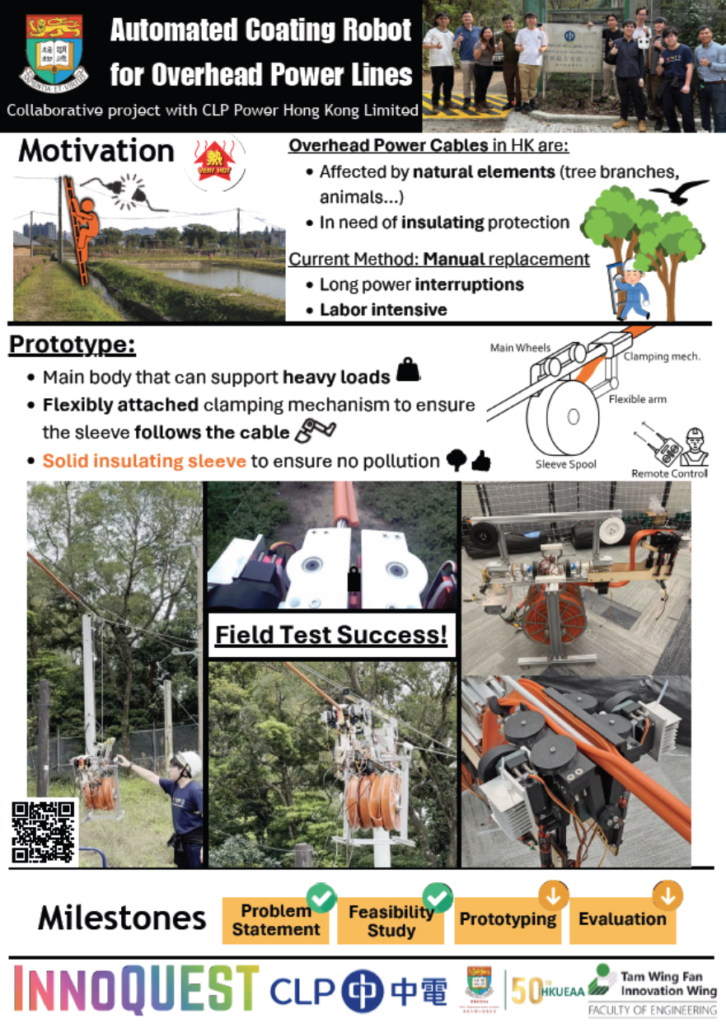
Overhead Power Line Coating Robot Development
Overhead Power Line Coating Robot Development was developed as a final year project under the supervision of Dr. Match Ko, Assistant Head in the Department of Mechanical Engineering. This project aims to create a robot that allows for easy removal and replacement of insulation, reduction of labor time, and elimination of the need for power outages during maintenance.
In the end, a functional prototype of the robot was developed and tested on simulated rigs and realistic training setups to evaluate the functionality of the robot. Results showed the robot’s performance is comparable to existing solutions in key aspects, successfully ascending and operating on live cables to install sleeves with acceptable reliability. While some parts could subject to future improvements, this prototype showed potential to lower labor costs, increase cable insulative installation speed, and offer a non-permanent insulation alternative.
Overhead Power Line Coating Robot Development expressed gratitude to the Innovation Wing and the Faculty of Engineering for their support. The team plans to continue leveraging the resources of Innovation Wing for further development of robot.
Team information:
Supervisors: Dr. Match Ko
Project Leader: Hu Ka Hei, BEng(ME)
Team Member: Lo Hoi Fung, BEng(ME), Wang Fuheng, BEng(ME), Apinat Ngampanpaisan, BEng(ME), Wong Man Ki Mason, BEng(ME)